Liberty and Justice Inspired Apparel
October 18, 2026
Liberty and justice aren't decoration - they're a daily practice. Here's what apparel genuinely inspired by liberty and justice looks like, wears like, and stands for.
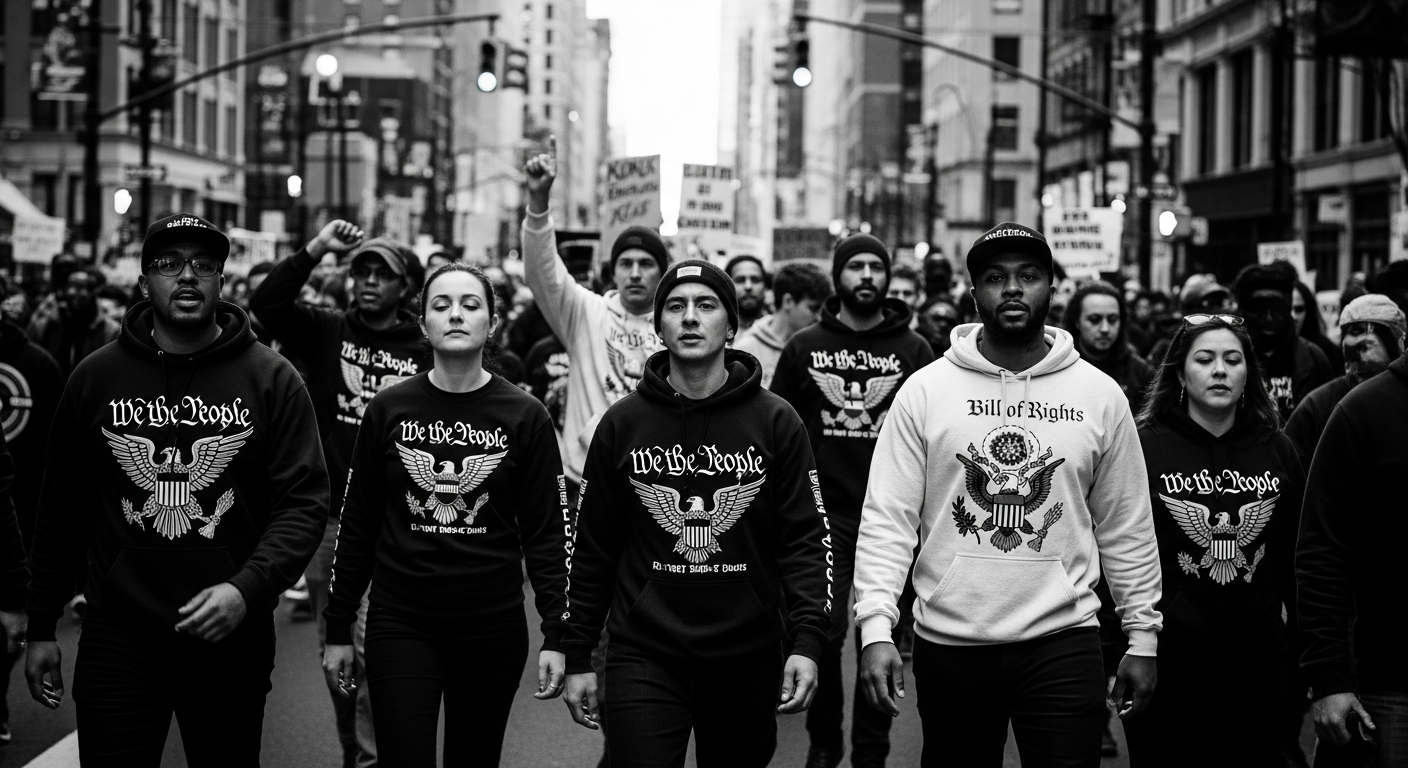
There is a version of liberty and justice that lives only in monuments.
On courthouse facades in granite. In the words of founding documents that most people read once in a classroom and never again. In the Pledge of Allegiance, recited so many times across so many mornings that the specific weight of what the words are actually claiming - that this republic exists under a specific commitment to liberty and justice for all - has been worn smooth by repetition into something that sounds like tradition rather than a demand.
And then there is the version that lives in daily practice.
In the specific decision, made every morning, to be publicly who you are and what you believe - to express the convictions you actually hold in the medium that is most persistently and most publicly present in every ordinary context of daily life.
Apparel inspired by liberty and justice is not about the monument version.
It is about the daily practice version.
And the daily practice version is the one that actually matters.
The distinction between liberty and justice as monuments and liberty and justice as daily practice is the central tension that genuinely inspired apparel in this territory has to navigate - and that most apparel claiming this inspiration fails to navigate with sufficient seriousness.
The monument version is easy to use in clothing. It requires only the appropriation of words whose authority is established and whose visual weight is immediately legible - words that look significant on a chest because the history behind them is genuinely significant, borrowed from that history without necessarily engaging with what they actually demand.
The daily practice version is harder to build into clothing. It requires genuine engagement with what liberty and justice mean - at the level of specific rights, specific threats, specific organisations doing the specific work that these values require to be more than aspirational language. It requires production practices consistent with the values the clothing claims to express. It requires giving that funds the work rather than borrowing the authority of the work for marketing purposes. And it requires material quality commensurate with the weight of what is being claimed - because clothing that carries the most important concepts in the American political vocabulary in a vehicle that degrades within months is making a statement about how seriously those concepts are being taken.
This article is about the daily practice version - what it looks like, what it requires, and why the distinction between the monument version and the daily practice version is the most important distinction available in the liberty and justice apparel space.
What Liberty and Justice Actually Demand of Apparel
The Specific Standards That Genuine Inspiration Requires
The concepts of liberty and justice are not decorative. They are demanding. They carry specific philosophical content - grounded in centuries of political thought and centuries of political struggle - that places specific requirements on any apparel claiming to be genuinely inspired by them rather than merely aesthetically adjacent to them.
Here is what those requirements look like when applied specifically to clothing.
Requirement 1: Engagement with specific rights rather than general ideals.
Liberty, in the philosophical tradition this brand is built upon, means specific things - freedom of expression, freedom of conscience, freedom from arbitrary institutional interference, the specific protections against government overreach that the First, Fourth, Fifth, and Fourteenth Amendments to the Constitution enumerate and that the Universal Declaration of Human Rights articulates as universal rather than as American-specific.
Justice means specific things too - equal treatment under law, the consistent application of legal protections regardless of who a person is, the specific condition in which the same rules govern the same behavior regardless of race, class, gender, religion, or political affiliation.
Apparel genuinely inspired by liberty and justice engages with these specific meanings rather than with the general atmosphere of political significance that the words produce when used without specific content. As documented in Modern Streetwear Inspired by Liberty and Justice and The Meaning Behind the Unalienable Rights™ Movement, the specificity of the engagement is the marker that distinguishes genuine inspiration from the aesthetic appropriation of political vocabulary.
The consumer who asks a brand "which specific liberties does your clothing represent?" and "which specific justice claims does your brand take a position on?" is asking the right questions. The brand that can answer them specifically - with reference to specific rights, specific contemporary threats, specific organisations doing specific work - is the brand genuinely inspired by what it claims to be inspired by. The brand that responds with general language about freedom and fairness is the brand using the words without engaging with their content.
Requirement 2: Production that does not contradict the values expressed.
The specific irony available in the liberty and justice apparel space is the brand claiming to represent liberty while producing clothing under conditions that deny liberty to the workers who make it - suppressed wages, suppressed organizing rights, dangerous working conditions. The irony is not only philosophical. It is practical evidence that the inspiration is decorative rather than genuine.
As documented in The Real Difference Between Ethical Fashion and Sustainable Fashion and Human Rights Clothing Designed for Modern Consumers, the production practices of a clothing brand are among the most specific available evidence of whether its values claims are genuine or performed. The brand claiming liberty and justice as its inspiration and maintaining full supply chain opacity about the conditions under which its clothing is produced is providing specific evidence that the inspiration is the monument version rather than the daily practice version.
The daily practice version of liberty and justice inspiration requires production practices consistent with what those values demand - workers treated with the dignity that human rights frameworks identify as universal, wages that reflect the value of the labor rather than the minimum required to fill the order, conditions that would not themselves constitute the kind of institutional overreach that liberty and justice are supposed to protect against.
Requirement 3: Financial support for the organisations doing the work.
Liberty and justice are not self-maintaining. The specific freedoms that liberty encompasses - freedom of expression, freedom of the press, freedom from surveillance overreach, the due process protections that prevent arbitrary government action against individuals - require the ongoing legal and advocacy work of specific organisations to remain meaningful in practice rather than only in principle.
These organisations - the ACLU defending First Amendment rights in court, the Electronic Frontier Foundation protecting digital liberty against surveillance overreach, the Reporters Committee for Freedom of the Press defending press freedom against the specific threats that accountability journalism faces, the Equal Justice Initiative challenging the specific inequalities in the legal system that represent justice's most documented failures - do this work because they are funded to do it. By donations. By memberships. And by the purchasing decisions of people who choose to buy from brands that have made structural commitments to fund this work rather than only to use its vocabulary.
The apparel genuinely inspired by liberty and justice is the apparel whose purchase contributes specifically to this funding - in specific percentages, to named organisations, reported on a regular schedule, applied to every sale rather than selected campaigns.
Ten percent of every Unalienable Rights™ purchase is this commitment. Not vague. Not seasonal. Structural, specific, and verifiable. As documented in How Ethical Streetwear Helps Support Social Causes and How Unalienable Rights™ Turns Fashion Into Action, this structural giving is the specific thing that makes the clothing genuinely activist rather than aesthetically aligned with activism.
Requirement 4: Material quality commensurate with the weight of the content.
The fourth requirement is the one that is easiest to overlook and most practically significant for the person wearing the clothing every day: the material quality of the vehicle carrying the liberty and justice message must be commensurate with the weight of what is being claimed.
As established in What Makes Premium Streetwear Feel Different and the broader quality argument across this journal - most directly in How to Spot High-Quality Streetwear Before You Buy - the physical quality of clothing communicates something about how seriously the brand making it treats the message it carries.
Liberty and justice are the most important concepts in the American political vocabulary. The apparel that carries them on a 140 GSM fast fashion base with DTG printing that will crack and fade within months is communicating, through its material choices, that those concepts are not being taken as seriously as they deserve. The apparel that carries them on a 280+ GSM ring-spun cotton heavyweight base with quality screen printing that will still look excellent at wearing 150 is communicating the opposite - that the commitment the clothing expresses is as serious as the concepts it represents.
The UR Classic Logo Tee at $45 is built to this standard. Every production decision - fabric weight, yarn quality, print application, seam construction - was made in service of producing a piece worthy of what it represents. Not just functional. Genuinely worthy.
Liberty and Justice in the Specific Contemporary Moment
Why These Values Are Specifically Urgent in 2026
The argument for liberty and justice inspired apparel is not equally strong in every historical moment. The specific urgency of making these values publicly visible varies with the specific degree to which they are threatened, contested, or at risk of the gradual normalization of their erosion.
In 2026 specifically, the urgency is significant - and the reasons are specific rather than generally alarmist.
The surveillance dimension of liberty.
The specific expansion of government and institutional surveillance capability - documented through multiple years of reporting by the Electronic Frontier Foundation and confirmed through legal discoveries in ongoing civil liberties litigation - represents a specific and documented threat to the conditions under which freedom of expression and freedom of association can be genuinely exercised.
The freedom to hold and express opinions without those opinions being monitored, recorded, and potentially used against the person holding them is the specific dimension of liberty most directly threatened by the current surveillance infrastructure. The clothing that makes visible a commitment to this dimension of liberty - that expresses, in the ordinary daily contexts where surveillance is most normalized, the conviction that monitoring people's communications and associations without specific legal authorization is an overreach that should be contested - is clothing with specific contemporary relevance.
The equal justice gap.
The specific and documented gap between formal legal equality and its practical realization in the American justice system - in arrest rates, charging decisions, bail determinations, sentencing patterns, and conditions of incarceration - represents the most persistent and most specifically documented failure of the justice principle in domestic policy.
Organisations like the Equal Justice Initiative, the Innocence Project, and the National Legal Aid & Defender Association document this gap specifically and work to close it through legal advocacy, policy work, and the direct representation of people for whom the equal justice principle has most completely failed.
The clothing that makes visible a commitment to equal justice - not justice as a general aspiration but justice as the specific, measurable condition of whether the same rules apply to the same people in the same circumstances regardless of who they are - is clothing with specific relevance to the specific contemporary failure that the equal justice gap represents.
The press freedom dimension.
The Reporters Committee for Freedom of the Press documents specific and ongoing threats to the press freedom that the First Amendment protects - through the use of subpoenas to identify journalistic sources, through strategic litigation designed to chill accountability reporting, and through the specific chilling effects that uncertainty about legal protection produces in reporters covering powerful institutions.
Press freedom is not only a journalistic concern. It is a democratic concern - the specific public interest in the existence of a press capable of holding powerful institutions accountable without requiring the permission of those institutions or assuming the legal risk of being identified as a source by those seeking to limit accountability journalism.
The clothing that makes visible a commitment to press freedom - to the specific First Amendment protection that allows accountability journalism to exist as a genuine fourth estate rather than as a permission-dependent information service - is clothing with specific relevance to the specific contemporary threats that accountability journalism faces.
The Design Language of Liberty and Justice
What Genuine Inspiration Looks Like in Visual Form
The design language of apparel genuinely inspired by liberty and justice is different from the design language of apparel using these words decoratively - and the difference is visible to anyone who has engaged with what the concepts actually mean.
Specificity in the visual vocabulary.
As established in Apparel That Reflects Personal Beliefs Without Saying a Word and Modern Streetwear Inspired by Liberty and Justice, the design that communicates most effectively is the design that is specific - that makes choices that could only make sense for the specific content they are presenting.
In the liberty and justice territory, this means design that engages with specific rights rather than with general freedom imagery - design organized around the specific legal language that defines these rights, the specific institutions that protect them, or the specific visual traditions that have historically carried them in political art and protest culture.
The eagle, the scales, the torch - these are the generic visual vocabulary of liberty and justice imagery. They communicate the general territory without engaging with the specific content. The design that uses the specific language of constitutional rights, that references the specific organisations defending them, or that engages with the specific historical moments in which these values were most directly contested - this design is genuinely inspired rather than decoratively aligned.
Typography as argument.
In politically inspired apparel, typography is not merely a design element - it is an argument. The specific choices of typeface, weight, scale, spacing, and composition communicate something about how the content should be received: whether the brand treats the claim with the seriousness of a legal document, the urgency of a political statement, or the decorative authority of historical pastiche.
Genuinely liberty and justice inspired apparel uses typography that serves the argument the clothing is making - that communicates precision and conviction rather than decoration or nostalgia. Clean, direct, legible type in weights and arrangements that communicate the specific character of the rights being represented rather than producing a general political aesthetic.
As explored across the editorial content in this journal, the intellectual engagement with what liberty and justice actually mean is itself evidence that the typography is serving content rather than appropriating its authority.
Design as daily wear, not statement piece.
The most important design constraint for liberty and justice inspired apparel is the everyday wear constraint - the requirement that the design work as clothing across the full range of ordinary daily contexts rather than only as a statement piece reserved for specifically political occasions.
This constraint is not a compromise with the political content. It is the specific requirement of the daily practice version of liberty and justice rather than the monument version. As documented in Freedom-Inspired Apparel for Everyday Life and Clothing That Brings Purpose Into Everyday Style, the clothing that works only in specifically political contexts fails the most important function that liberty and justice inspired apparel can perform: making these values visibly present in the ordinary daily contexts where they are most normalized, most contested, and most concretely lived.
Wearing Liberty and Justice - The Practice
What the Daily Practice Version Actually Involves
The daily practice version of liberty and justice - the version that inspired apparel is built to support - involves specific activities that go beyond wearing the clothing and that the clothing is designed to complement rather than substitute for.
The wearing itself - daily and genuine.
The first dimension of the daily practice is simply wearing the conviction genuinely and consistently across the full range of ordinary daily contexts. Not only at demonstrations. Not only at political events. On the Tuesday morning commute. In the office. At the grocery store. In the contexts where the visibility of genuine conviction is least expected and therefore most culturally significant.
As documented in Why Silence Isn't Neutral - And Neither Is Style and Streetwear That Creates Community Through Shared Values, this consistent daily wearing produces the cultural visibility of shared genuine conviction - the normalization of public commitment to liberty and justice in ordinary daily contexts - that has political significance beyond any individual wearing.
The practical guide for making liberty and justice inspired apparel genuinely wearable across this full range of daily contexts is in How to Style Rights-Themed Streetwear for Everyday Wear and How to Dress Confidently Every Day.
The purchasing itself - as an act of support.
The second dimension of the daily practice is the purchasing decision - the specific choice to direct clothing budget toward brands with structural commitments to funding the organisations working on liberty and justice rather than toward brands using the vocabulary without the commitment.
Ten percent of every Unalienable Rights™ purchase goes to these organisations. The choice to purchase from this brand rather than from a cheaper alternative with comparable aesthetics is a choice to fund the ACLU's constitutional litigation, the EFF's digital rights advocacy, and the Reporters Committee's press freedom work at the level of the purchasing decision - to make every clothing transaction simultaneously an expression and an action.
The community itself - recognising and being recognised.
The third dimension of the daily practice is the community formation documented in Streetwear That Creates Community Through Shared Values - the recognition events between people who share genuine convictions about liberty and justice, encountered through shared visible commitment in ordinary physical public space.
The community that forms through this recognition is the community most directly capable of the collective forms of liberty and justice advocacy that go beyond the individual's daily wearing - the organised political engagement, the collaborative support for advocacy organisations, and the mutual reinforcement of the conviction that these values are worth the ongoing daily effort of keeping them visible.
The engagement itself - beyond the clothing.
The fourth dimension of the daily practice - and the one the clothing is designed to point toward rather than substitute for - is the broader engagement with the issues that liberty and justice represent: reading the reporting of the organisations doing this work, understanding the specific legal contests being waged in their name, supporting the organisations financially beyond the ten percent of the clothing purchase, and participating in the political processes that determine whether liberty and justice move toward or away from the standards the founding documents claimed.
As acknowledged honestly in How Unalienable Rights™ Turns Fashion Into Action, the clothing is one dimension of this engagement - an important one, because daily visibility matters, because funding matters, because community matters. But it is not the sum of what liberty and justice require of the people who believe in them.
It is, at best, the daily reminder.
The Brands Worth Wearing - The Evaluation Applied
What Genuine Liberty and Justice Inspiration Looks Like Across the Market
The consumer who has internalized the four requirements from Part One can evaluate any brand claiming liberty and justice inspiration with the specific framework those requirements provide.
Does the brand engage with specific rights? Can it name them, describe the current threats to them, and point to the organisations defending them? Or does it use liberty and justice as general atmospheric language without specific content?
Do its production practices reflect its values? Is it transparent about its supply chain? Does it disclose the conditions under which its clothing is produced? Or does it maintain the opacity that allows the gap between claimed values and actual practices to remain invisible?
Does it fund specific organisations doing specific work? Is the giving percentage specific, the organisations named, the amounts published on a regular schedule? Or are the giving commitments vague enough that verification is impossible and accountability is absent?
Is the material quality commensurate with what the clothing claims to represent? Does the fabric weight, the construction quality, and the print application reflect the seriousness of the content, or does the liberty and justice message sit on a vehicle whose quality contradicts the seriousness of the claim?
The brands that meet all four requirements are the brands worth the investment. In the liberty and justice apparel space specifically, they are rare - because meeting all four requirements simultaneously requires the structural discipline that monument-version inspiration does not demand and daily-practice version inspiration requires.
Unalienable Rights™ is attempting to meet all four requirements - and is honest, across this journal, about where the work of meeting them is complete and where it is ongoing. That honesty is itself part of the daily practice version of liberty and justice: the specific willingness to be accountable to the standard rather than to claim it has been fully achieved.
The Bottom Line
Liberty and justice are not decorative concepts.
They are demanding ones - grounded in centuries of philosophical argument, earned through centuries of political struggle, maintained through the ongoing legal and advocacy work of specific organisations funded by the specific financial support of the people who believe these values are worth protecting.
Apparel genuinely inspired by liberty and justice carries this weight - in the specificity of what it represents, in the consistency of the production practices that reflect its values, in the structural giving that funds the work the values require, and in the material quality that treats the content with the seriousness it deserves.
The monument version of liberty and justice asks nothing of the clothing that borrows its authority except that it look appropriately significant.
The daily practice version asks everything - genuine engagement, genuine consistency, genuine funding, genuine quality.
The clothing worth wearing in the name of liberty and justice is the clothing built for the daily practice version.
Not the one that looks right on a courthouse facade.
The one that still looks right on wearing 150.
On a Tuesday morning in the produce aisle.
Where liberty and justice actually live.
Unalienablerights.com produces apparel genuinely inspired by liberty and justice - specific rights, specific giving, genuine quality, honest communication. The UR Classic Logo Tee: $45, 280+ GSM ring-spun cotton, quality screen printing, 10% to the organisations protecting the rights it represents.
→ Shop the Current Drop → Read Our Mission → Contact Us → Read More From the Journal