Streetwear That Makes a Statement Without Following a Trend
October 18, 2026
The strongest statements in streetwear have nothing to do with trends. Here's the honest guide to clothing that says something real - and keeps saying it for years.
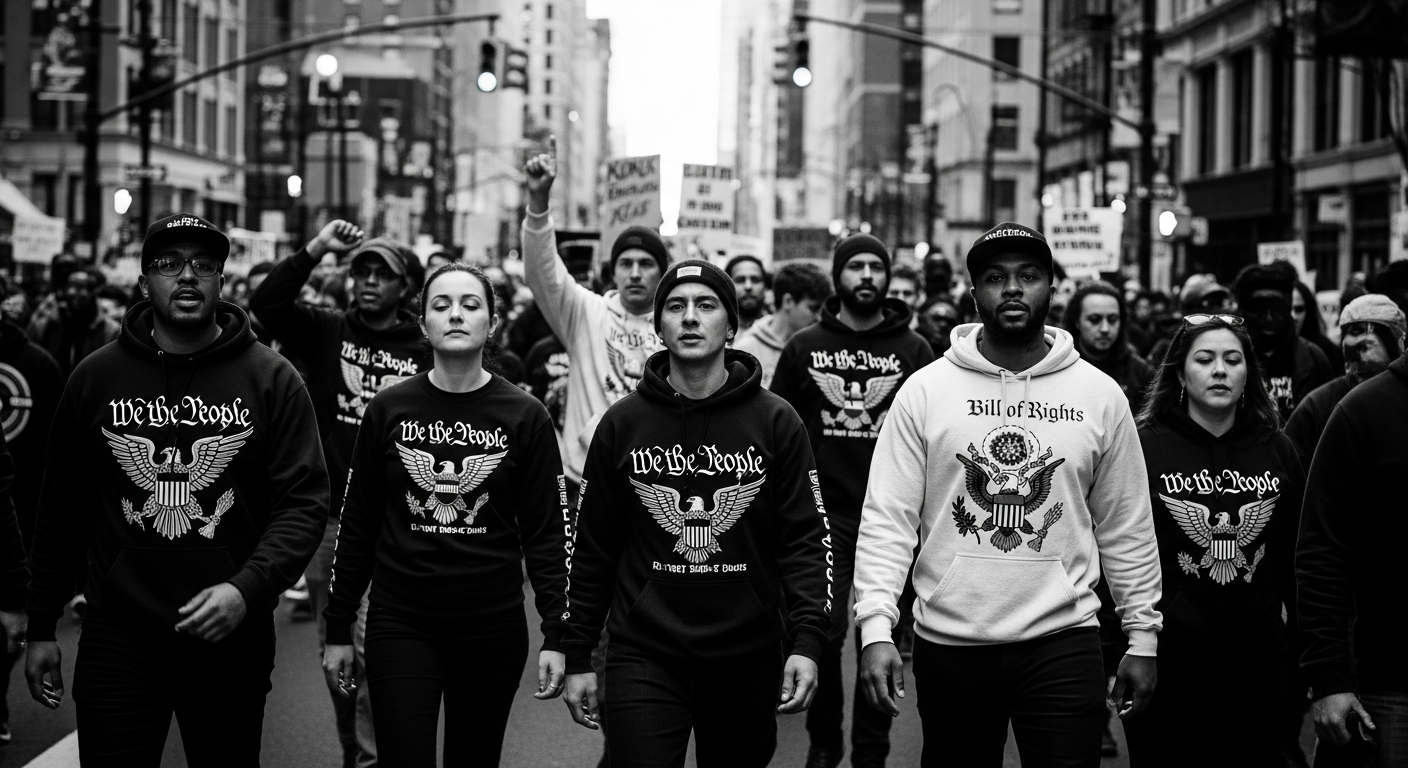
There are two ways to make a statement with clothing.
The first is to wear what everyone is wearing right now - to align with the current visual moment so precisely that the alignment itself communicates something: that you are current, that you are paying attention, that you are inside the specific aesthetic conversation happening at this specific moment.
The second is to wear what you actually believe - to choose clothing whose meaning comes not from its relationship to the current trend cycle but from its relationship to something that does not expire: a conviction, a community, a commitment to specific values that the trend cycle cannot make more or less relevant because their relevance was never a function of the trend cycle to begin with.
These two approaches produce different statements. The first produces a statement about this moment. The second produces a statement about who you are.
One of these statements is worth making for years. The other expires in weeks.
The trend-based statement and the conviction-based statement look similar from the outside - both involve wearing something that communicates, something that is expressive rather than purely functional, something that says something to the people who encounter it. But the similarity is surface level. The underlying mechanisms are entirely different, and those different mechanisms produce entirely different consequences for how long the statement remains meaningful, how personally authentic it feels to the person making it, and what it actually communicates to the people who receive it.
This article is the specific account of what makes the conviction-based statement possible in clothing - what it requires from the design, the production, the brand, and the wearer - and why, in the specific cultural and political moment of 2026, the conviction-based statement is not just personally more meaningful than the trend-based one but more politically significant.
The trend-based statement has been documented and critiqued across multiple articles in this journal - most directly in Personal Style Beyond Trends and Algorithms, Long-Lasting Clothing in the Age of Disposable Trends, and Why Personal Style Matters More Than Following Trends. This article builds on those foundations and focuses specifically on what the conviction-based statement looks like in practice - the specific clothing choices, the specific wearing practices, and the specific reasons why statement-making streetwear that does not follow trends is more durable, more authentic, and more worth building toward than its trend-dependent alternative.
Why Trend-Based Statements Expire - And Conviction-Based Ones Don't
The Specific Mechanisms That Determine Statement Durability
A statement made through clothing lasts as long as the source of its meaning lasts. This is the most basic and most consistently overlooked principle of statement-making through clothing - and it is the principle that most directly explains why trend-based statements expire so rapidly while conviction-based statements can last indefinitely.
The trend statement's meaning source: currency.
The trend-based statement derives its meaning from its currency - from its precise alignment with the specific visual language of a specific cultural moment. The statement is "I am current" - and this statement is meaningful only for as long as currency is present.
Currency is not a durable property. By definition, it expires when the moment that defined it moves on. And in the microtrend environment of 2026 - where specific aesthetic moments cycle in weeks rather than seasons - the expiration of currency happens faster than at any previous point in the history of fashion, as documented in Long-Lasting Clothing in the Age of Disposable Trends.
The specific consequence: a trend-based statement that is genuinely current and genuinely meaningful today is, with high probability, a statement that will feel dated within months - not because anything has changed about the person making it, but because the external standard of currency against which it was meaningful has shifted. The person wearing the peak-trend piece from three months ago is not making the same statement they were three months ago. They are making a statement about the gap between where the trend was and where it is - a statement about being behind rather than ahead.
The conviction statement's meaning source: genuine belief.
The conviction-based statement derives its meaning from something that the trend cycle cannot affect: a genuine belief about what matters, what rights are worth protecting, what kind of person the wearer is and what they stand for.
This source of meaning does not expire with the trend cycle because it was never a function of the trend cycle. The conviction that freedom of expression is a non-negotiable right does not become less true when microtrend 47 of the quarter has given way to microtrend 48. The commitment to wearing that conviction publicly in the ordinary contexts of daily life does not become less meaningful when the trend adjacent to it has moved on.
As documented in Apparel That Reflects Personal Beliefs Without Saying a Word and Why People Feel More Confident Wearing Something They Believe In, the clothing that expresses genuine conviction produces a different and more durable quality of wearing satisfaction than the clothing that expresses trend alignment - because the rightness of the conviction-based piece is not contingent on its current moment in the trend cycle. It is stable, because it is grounded in something stable.
This stability is the specific property that makes conviction-based statement streetwear genuinely worth building toward - not just psychologically more satisfying but practically more valuable, because the investment it represents retains its full meaning across years rather than expiring within months.
The Statement That Gets Stronger Over Time
There is a specific and practically significant asymmetry between trend-based and conviction-based statements in the domain of how they age.
The trend-based statement gets weaker with time - as the trend that defined it recedes, the statement becomes not just less current but actively retrograde, the specific aesthetic timestamp of a moment that has passed. The piece that was making the strongest possible current statement six months ago is making a statement about being behind the current moment six months later.
The conviction-based statement gets stronger with time - as the person wearing it accumulates wearing history with the piece, as the biographical content documented in Clothing That Becomes Better With Time and Identity, Belonging, and the Clothes People Keep Forever accumulates, the statement becomes more genuine rather than less - more clearly the expression of a person who actually believes what the clothing says rather than someone who is wearing the current thing.
The person who has been wearing the same genuine conviction in the same quality piece for three years is making a stronger statement than the person who just acquired the equivalent piece - because three years of consistent daily wearing communicates something specific about the genuineness of the conviction that recent acquisition does not.
What Streetwear That Makes a Statement Without Trends Actually Looks Like
The Specific Characteristics - Design, Quality, Values
Streetwear that makes a genuine statement without following trends shares specific characteristics that are identifiable and evaluable - not a matter of aesthetic preference but of specific design, quality, and values choices that either produce or undermine the conviction-based statement.
Characteristic 1: The statement is specific rather than atmospheric.
The strongest non-trend statements in streetwear are specific rather than atmospheric - they express a precise conviction about a specific thing rather than producing a general political or subcultural atmosphere.
The specific conviction can be about rights: freedom of expression, equal justice under law, freedom from surveillance. It can be about values: quality over quantity, deliberate living, genuine community over managed engagement. It can be about identity: who the wearer is and what community they belong to, expressed through the visual vocabulary of that community rather than through generic political aesthetics.
What it cannot be - and still function as a genuine statement - is general. The clothing that produces a generally progressive or generally activist atmosphere without expressing any specific conviction is not making a statement. It is producing an aesthetic. And the aesthetic, being untethered to specific content, is as subject to trend expiration as any other aesthetic - as documented in Personal Style Beyond Trends and Algorithms.
The design vocabulary of specific conviction has been explored in Apparel That Reflects Personal Beliefs Without Saying a Word and Modern Streetwear Inspired by Liberty and Justice. The conclusion: direct typographic engagement with specific rights language, compositional choices that reflect the specific character of the conviction being expressed, and design that could only mean what it means rather than designs that produce a general political atmosphere that might mean several different things depending on who is reading it.
Characteristic 2: The quality is commensurate with the statement's intended lifespan.
A statement intended to last years requires a vehicle built to last years. As established across multiple quality-focused articles in this journal - most directly in Everyday Apparel Designed for Years, Not Months and Durable Clothing vs Trend-Driven Fashion: Which Lasts Longer? - the material and construction standards that produce this longevity are specific and identifiable.
For the graphic tee category most directly relevant to statement streetwear: 280+ GSM ring-spun cotton that softens toward worn-in quality rather than thinning toward degradation, quality screen printing with genuine opacity and tactile presence rather than DTG digital printing that begins cracking within months, and double-stitched construction at all stress points rather than the single-stitched construction that fails earlier under the mechanical stress of regular wearing.
The quality investment required to produce this longevity is the specific investment documented in Quality Clothing vs Quantity Shopping: Which Saves More Money? - one that is dramatically more economical per wearing across any genuine time horizon than the cheap alternative despite the higher unit price.
The UR Classic Logo Tee at $45 is built to this standard - for the person whose statement is worth making for years rather than weeks.
Characteristic 3: The brand behind it has structural commitment, not aesthetic adjacency.
The most important single distinction between streetwear that makes a genuine statement and streetwear that makes the aesthetic of a statement is whether the brand behind it has structural commitment to the values it claims to represent or merely aesthetic adjacency to them.
Structural commitment looks like: ten percent of every sale to named organisations doing specific rights advocacy, applied to every sale rather than selected campaigns, with published amounts on a regular schedule that allows verification. It looks like production practices consistent with the values the clothing expresses - limited edition production, transparent supply chain, material quality that reflects genuine investment rather than minimum viable specification. And it looks like editorial engagement at the depth this journal represents - genuine intellectual engagement with the rights and ideas the clothing is inspired by.
Aesthetic adjacency looks like: using rights vocabulary and political imagery in design without funding the work the rights require. Producing the visual language of conviction without the structural evidence of it. Creating the impression of values-based commitment through design while maintaining the production and giving practices of a brand organized primarily around commercial optimization.
As documented in What It Means to Build a Brand Around Beliefs and Premium Clothing Designed for Conscious Consumers, the sophisticated consumer who has learned to distinguish structural commitment from aesthetic adjacency is the consumer most likely to invest in genuine statement streetwear rather than its simulation - and the distinction is available to anyone who asks the right questions and demands specific rather than atmospheric answers.
Characteristic 4: The statement works across the full range of daily contexts.
Streetwear that makes a genuine statement without following trends must work as everyday clothing across the full range of ordinary daily contexts - not only in the specifically political or specifically subculturally informed contexts where its meaning is immediately legible to everyone present.
The statement made in a context where it is expected communicates something different from the statement made in a context where it is not - as documented in Why Silence Isn't Neutral - And Neither Is Style and Freedom-Inspired Apparel for Everyday Life. The most politically significant statement is the one made in the ordinary daily context where it is least expected - in the grocery store, the commute, the workplace - because its presence there communicates something specific about the consistency and genuineness of the conviction behind it.
The practical styling guidance for making rights-themed statement streetwear work across this full contextual range is documented in How to Style Rights-Themed Streetwear for Everyday Wear and What to Wear Daily - Simple Outfit Ideas for Comfort and Style.
The History of Non-Trend Statement Streetwear
What Has Always Made the Strongest Statements
The most powerful statement pieces in the history of streetwear and activist fashion have shared the characteristic that this article identifies as defining: their meaning came from conviction rather than from trend currency. Understanding this historical pattern clarifies what makes non-trend statement streetwear possible and distinguishes it from trend-adjacent political aesthetics.
The work shirt of the labor movement.
The specific clothing choices of the early American labor movement - the practical work clothing that organizers wore to marches and organizing meetings in the early twentieth century - was statement clothing in the most direct sense: the specific choice to appear as workers, to refuse the formal dress that aligned with existing power structures, was itself a statement about whose interests the movement represented and who had the right to organize for better conditions.
This was not trend-based statement clothing. It was conviction-based: the conviction that workers possessed the same rights to fair compensation and safe conditions that any other human being possesses - rights that the natural rights tradition identifies as unalienable. The statement this clothing made was grounded in this conviction rather than in any aesthetic currency that the trend cycle defined.
As documented in How Fashion Became a Powerful Tool for Political Activism, this pattern - conviction-based statement clothing grounded in specific rights claims rather than in aesthetic trend alignment - runs through the full history of activist fashion.
The concert tee and subcultural specificity.
The concert tee - the band shirt, the tour shirt, the specific piece of clothing that communicated membership in a specific music community - is the most widely distributed form of non-trend statement streetwear in recent history. Its statement was not about trend alignment. It was about community membership: I was there, I belong to this, I share the aesthetic and cultural convictions that this music represents.
The concert tee's statement power came from its specificity - from the fact that it identified the wearer as a member of a specific community with a specific shared aesthetic and cultural vocabulary. This specificity is exactly what makes it a genuine statement rather than a general musical atmosphere.
The conviction-based rights statement of the kind this brand makes is the contemporary equivalent - specific community membership identified through specific shared conviction made visible in specific clothing, in the full range of ordinary daily contexts where that visibility is most meaningful.
The Black Panther uniform and organised conviction.
As documented in Modern Streetwear Inspired by Liberty and Justice and Apparel Inspired by the Ideas Behind Unalienable Rights, the Black Panther Party's specific uniform - black beret, black leather jacket, powder blue shirt - was statement clothing organized around a specific justice claim: equal protection under law, enforced through organised community accountability to police violence.
This statement was not trend-based. The specific uniform choices were made for specific reasons related to the specific political work the organisation was doing - communicating organised power, making membership visible and identifiable, and presenting the specific visual argument that the community being organised had the dignity and the capacity for self-determination that the political system was denying.
The statement remained powerful for years precisely because it was not trend-based - because the justice claim it expressed was specific, ongoing, and grounded in conditions that did not change with the aesthetic calendar.
Building the Non-Trend Statement Wardrobe
The Practical Architecture of Conviction-Based Statement Streetwear
The non-trend statement wardrobe - assembled from the principles above rather than from trend-following purchasing - has a specific architecture that is simpler, more coherent, and more financially rational than the accumulated trend wardrobe.
Foundation: Quality basics that never make a statement and never need to.
The foundation of the non-trend statement wardrobe is a small number of genuinely excellent quality basics - heavyweight dark denim, quality natural fiber basics, versatile outerwear - that provide the neutral ground from which the statement pieces operate.
These foundation pieces make no statement of their own. Their function is to not make a statement - to provide the contextual foundation from which the conviction-based statement pieces can communicate clearly without visual competition. As documented in Why Buying Fewer Clothes Can Help You Build a Better Personal Style and Premium Clothing and the Value of Buying Less, the foundation layer is most effective when it is small, excellent, and consistently reliable - three to five pieces that work in every context and with every statement piece in the wardrobe.
The quality standards for this foundation layer are documented in How to Spot High-Quality Streetwear Before You Buy - the same standards that apply to the statement layer, because quality is as important in the foundation as it is in the statement.
Statement layer: Three to five conviction-based pieces in heavy rotation.
The statement layer is the layer that does the work this article is describing - the specific, conviction-based graphic pieces that express genuine beliefs about specific things and that make those beliefs visible in the full range of ordinary daily contexts.
Three to five genuinely excellent statement pieces in regular rotation is the appropriate scale for most people's wardrobes - enough to provide genuine variety across the week's wearing without so many that any individual piece is worn infrequently enough to fail to accumulate the biographical significance that genuine daily wearing produces.
Each of these pieces should meet the four characteristics above: specific rather than atmospheric statement, quality commensurate with intended years-long lifespan, from a brand with structural commitment rather than aesthetic adjacency, and designed for the full range of daily contexts.
For the person whose genuine convictions center on constitutional rights and civil liberties - the person this journal is written for - these pieces are the rights-themed graphic tees and hoodies that Unalienable Rights™ produces. Each built to the quality standard that makes years-long wearing possible. Each connected through the structural giving commitment to the organisations doing the rights advocacy work that genuine conviction requires.
No trend layer: The deliberate absence.
The most distinctive feature of the non-trend statement wardrobe is not what it contains. It is what it does not contain - the trend layer that the fast fashion model is designed to produce and that the pre-purchase tests in How to Stop Buying Clothes You Only Wear Once are designed to prevent.
The absence of trend purchases in the non-trend statement wardrobe is not deprivation. As documented in Why Buying Fewer Clothes Can Help You Build a Better Personal Style, the removal of trend-based noise from the wardrobe is the specific condition that makes the conviction-based signal clearer, more coherent, and more genuinely expressive of who the person actually is.
The non-trend statement wardrobe is smaller. Every piece in it is either a quality foundation piece or a conviction-based statement piece. Nothing is present for trend reasons. Nothing is present because it was on sale or because the impulse at the moment of purchase overpowered the considered judgment that it did not belong.
The result is a wardrobe that makes the most consistent and most specific statement available - the statement of a person who knows exactly who they are, what they believe, and what clothing deserves to be in their life.
What the Genuine Statement Produces
The Long View - What Making a Real Statement Actually Achieves
The genuine, conviction-based statement made through streetwear that does not follow trends produces specific effects that the trend-based statement does not - effects that operate at the individual level, the community level, and the political level.
At the individual level: Coherence and confidence.
As documented in Why People Feel More Confident Wearing Something They Believe In and How to Dress Confidently Every Day, the specific quality of confidence produced by wearing genuine conviction is different from and more durable than the confidence produced by wearing trend alignment.
The trend-aligned wearer is confident while the trend is current and increasingly uncertain as it fades. The conviction-aligned wearer's confidence is stable - because the conviction grounding it is stable. What you believe does not expire on the same schedule as what is aesthetically current.
At the community level: Recognition and belonging.
As documented in Streetwear That Creates Community Through Shared Values and Why Our Customers Don't Just Buy - They Connect, the conviction-based statement produces the specific recognition events between strangers in ordinary public space that constitute genuine community formation - the two-second exchange of acknowledgment between people whose shared visible commitment to shared genuine convictions makes them legible to each other.
Trend-based statements produce recognition between people who share aesthetic preferences. Conviction-based statements produce recognition between people who share genuine beliefs. The community formed through the second type of recognition is more durable, more politically capable, and more personally meaningful than the community formed through the first.
At the political level: Cultural normalization of genuine conviction.
The most significant long-term effect of conviction-based statement streetwear worn consistently across ordinary daily contexts is the gradual cultural normalization of public commitment to specific rights and values - the shift in what is visually normal in ordinary public space from the absence of visible rights advocacy to its consistent, unremarkable presence.
As documented in Why Silence Isn't Neutral - And Neither Is Style and Apparel Inspired by the Ideas Behind Unalienable Rights, this normalization effect is one of the most politically significant contributions that everyday clothing can make to the broader project of rights advocacy - not through any individual wearing, but through the cumulative effect of many individual wearings across many ordinary daily contexts over time.
The trend-based statement, by its nature, cannot contribute to this normalization - because the trend it expresses changes, taking the statement with it, before any stable cultural impression can be established. Only the conviction-based statement, maintained consistently across the years that normalization requires, can produce the cultural shift that genuine normalization involves.
The Bottom Line
The strongest statements in streetwear have never had anything to do with trends.
They have had to do with conviction - with the specific wearing of specific beliefs in specific daily contexts by specific people who actually hold those beliefs, consistently and genuinely, across the full arc of ordinary life rather than only in the moments when the trend cycle has temporarily aligned the aesthetic with the political.
Streetwear that makes a statement without following a trend is streetwear that knows what it believes, is made by a brand that means what it says, is built to last the years that genuine conviction lasts, and is worn in the ordinary daily contexts where genuine conviction is most visible and most politically significant.
The trend statement says: this is what I am wearing right now.
The conviction statement says: this is who I am.
One of these statements is worth making.
Make it well.
Make it consistently.
Make it for years.
Unalienable Rights™ produces the conviction statement - specific rights, genuine quality, structural giving, years-long durability. The UR Classic Logo Tee: $45, 280+ GSM ring-spun cotton, quality screen printing, built for the statement worth making for years. 10% to the organisations protecting the rights it represents.
→ Shop the Current Drop → Read Our Mission → Contact Us → Read More From the Journal
Additional Resources
Universal Declaration of Human Rights
Reporters Committee for Freedom of the Press