Why Meaningful Fashion Creates Stronger Brand Loyalty
August 1, 2026
The most loyal customers aren't bought — they're convinced. Here's the honest, research-backed account of why meaningful fashion generates loyalty that price never can.
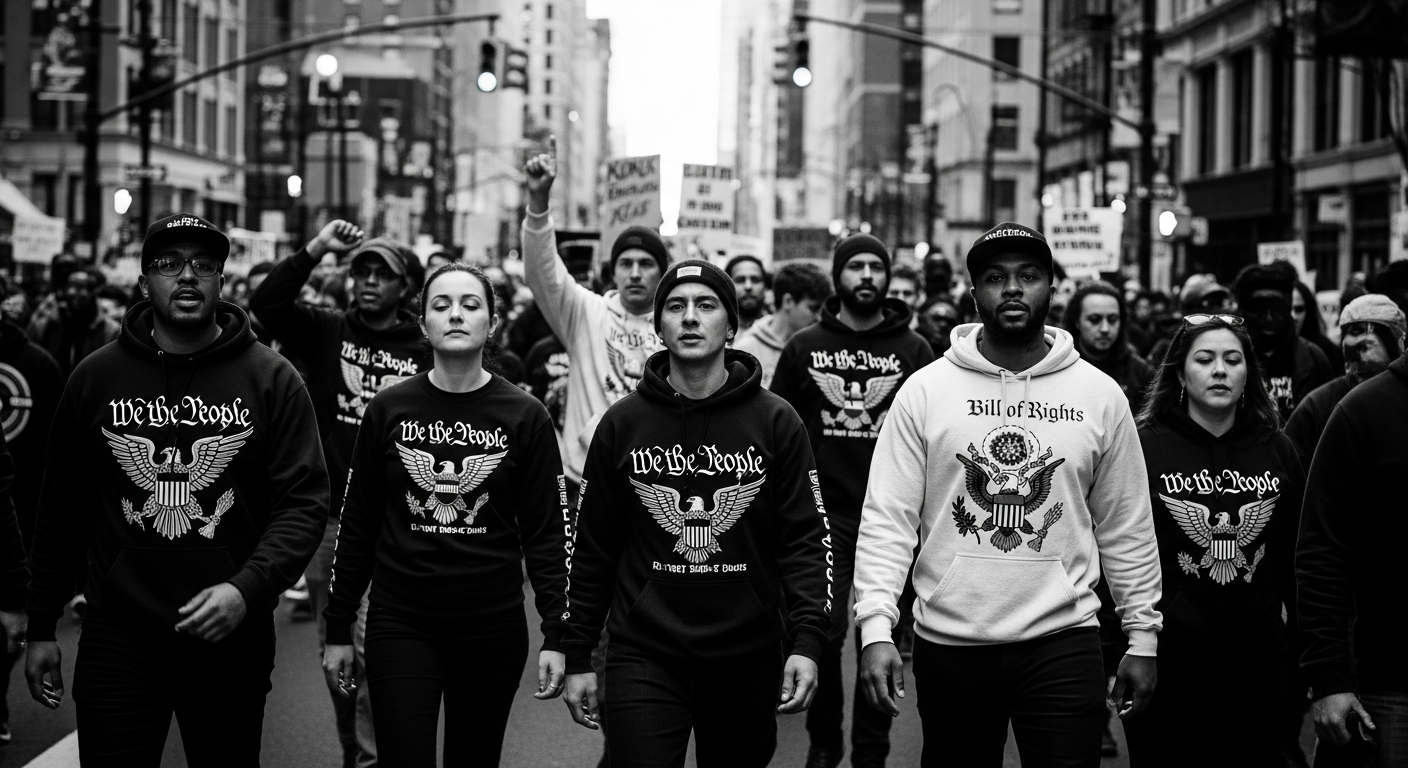
Brand loyalty, in the conventional marketing model, is a purchasing behavior — the tendency to choose the same brand repeatedly, across multiple transactions, in preference to available alternatives.
The conventional model treats loyalty primarily as a consequence of satisfaction: the customer who is satisfied with a brand's product, service, and price is more likely to return for the next transaction than the customer who is not. Satisfaction produces repeat purchasing. Repeat purchasing is loyalty. The marketing task is to maximize satisfaction — through product quality, service reliability, competitive pricing, and the various mechanisms of customer experience management that constitute the operational substance of conventional brand management.
This model is not wrong as far as it goes. Satisfaction does predict repeat purchasing. Product quality, service reliability, and competitive pricing do influence loyalty. But the model is incomplete in a way that becomes visible when you examine the specific differences between the loyalty generated by conventional fashion brands and the loyalty generated by meaningful fashion brands — the brands that have built genuine structural commitments to specific values and that attract customers on that basis.
The loyalty generated by meaningful fashion is not just stronger brand loyalty than satisfaction-based loyalty in a quantitative sense — though it is more durable, more resistant to competitive displacement, and more likely to produce the specific behaviors (recommendation, community participation, brand advocacy) that constitute the deepest and most commercially valuable forms of loyalty. It is different in kind. It operates through different psychological mechanisms, is grounded in different relationships between customer and brand, and is maintained by different conditions.
Understanding why meaningful fashion creates stronger brand loyalty requires understanding these different mechanisms — and understanding them honestly, including the honest acknowledgment of what maintaining this form of loyalty requires from the brand on an ongoing basis.
What Conventional Loyalty Actually Is — And Why It Is Fragile
To understand why meaningful fashion creates stronger brand loyalty, it helps to understand clearly what conventional satisfaction-based loyalty actually is and why it is inherently more fragile than the loyalty that genuine meaning generates.
Conventional loyalty is, at its core, a habit of lowest perceived switching cost. The customer returns to the same brand not primarily because of deep attachment but because the brand is familiar, has been satisfactory, and the cost of investigating and switching to alternatives exceeds the anticipated benefit of the switch. This is rational behavior, not irrational loyalty — the customer is doing something sensible given their information and their preferences.
The fragility of conventional loyalty follows directly from its nature. If a competitor reduces the switching cost — by making the alternative more visible, more accessible, or more obviously superior in quality or price — the calculus changes. If the brand reduces its own satisfaction level — through a product quality failure, a service failure, or a price increase that no longer feels justified — the calculus changes again. Conventional loyalty is in a perpetual state of being earned and re-earned through continuous performance at or above the satisfaction threshold.
This is expensive. It requires continuous investment in product quality, service quality, and competitive pricing — investments that must be maintained indefinitely, because the loyalty that depends on them does not accumulate against future periods of underperformance. A customer who was loyal for five years because the product was consistently good will not remain loyal through a period of product failure because of the five years of prior satisfaction. Conventional loyalty has no reserve.
The loyalty generated by meaningful fashion brands is different in this fundamental respect: it has a reserve. The customer who is loyal to a meaningful fashion brand because of genuine values alignment does not reassess that loyalty with every transaction. They have invested something more fundamental than satisfaction in the brand relationship — they have invested identification, values alignment, and community belonging — and this investment generates a form of loyalty that persists through ordinary disappointments in a way that satisfaction-based loyalty does not.
The First Mechanism — Identification and Identity Investment
The most fundamental mechanism through which meaningful fashion creates stronger brand loyalty is identification — the specific psychological process through which the customer comes to experience the brand as an expression of who they are rather than simply as a provider of products they like.
Research on brand identification — developed by Bhattacharya and Sen in their foundational work on customer-company identification — defines identification as the degree to which a customer defines themselves partly in terms of their relationship with the brand: the degree to which "I am a customer of this brand" becomes genuinely part of who the person is rather than merely a behavioral description of their purchasing patterns.
Identification of this depth is not generated by product satisfaction alone. Research consistently finds that it is generated primarily by perceived similarity between the brand's values and the customer's own values — by the sense that the brand represents what they represent, believes what the customer believes, and stands for what the customer stands for. The brand that a customer identifies with in this sense is not a brand they are satisfied with. It is a brand they are, in some sense, part of.
For meaningful fashion brands — brands that have built genuine structural commitments to specific values and that communicate those values with the depth and specificity that genuine understanding requires — this identification is available in a way that it is not available for conventional brands whose value proposition is primarily aesthetic and functional.
The customer who genuinely cares about constitutional rights and civil liberties, who has found a brand that expresses those specific convictions with genuine depth and supports the organisations working on them with genuine financial commitment, does not experience that brand primarily as a clothing brand they are satisfied with. They experience it as a brand that represents what they represent — that is organized around the same convictions that organize their own most serious political and ethical commitments.
This identification investment has direct consequences for loyalty. When a brand is experienced as an expression of who you are, the relationship with it is no longer primarily evaluative — no longer primarily about whether the product meets the satisfaction threshold. It is partly constitutive of your identity, and the maintenance of that identity investment creates loyalty that operates through a different and more fundamental mechanism than satisfaction.
The customer who would switch from their current clothing brand for a ten percent price reduction elsewhere will not switch from a brand that represents their values for a ten percent price reduction from a brand that does not represent those values. The two decisions are not comparable in psychological terms. The first is a comparative evaluation of products. The second is a question about who the person is and what they stand for — and that question has a very different answer than a price comparison.
The Second Mechanism — Community Belonging and Social Identity
The second mechanism through which meaningful fashion creates stronger brand loyalty is closely related to the first but distinct: the role of community belonging in the loyalty relationship.
Social identity theory — developed by Tajfel and Turner in their foundational work on intergroup relations and self-conception — establishes that people derive significant portions of their self-concept from membership in social groups, and that the positive evaluation of those groups is important to the maintenance of a positive self-concept. Group membership is not just socially convenient. It is psychologically constitutive — it is part of who the person is.
Meaningful fashion brands create genuine communities — not in the managed, platform-mediated sense of brand communities designed by marketing departments, but in the organic, values-constituted sense of groups of people who share genuine convictions and recognize each other through the medium of shared visible commitment. This is the community formation mechanism documented extensively in earlier articles in this journal: the recognition between strangers wearing shared visible commitment to the same values, the specific form of belonging that comes from making the same choice in the same world for the same reasons.
Membership in this community generates loyalty to the brand that created the conditions for community formation — not as a transactional obligation but as a natural consequence of the social identity investment that community membership represents. Leaving the brand would mean leaving the community — losing the community belonging, the social identity investment, and the specific recognition between members that the shared brand marker enables.
Research on social identity and brand loyalty consistently finds that community-based loyalty is among the most durable forms of loyalty available — more resistant to competitive pricing pressure, more likely to generate advocacy behaviors, and more likely to survive brand failures that would dissolve purely satisfaction-based loyalty. The customer whose brand loyalty is partly constituted by social identity investment in the brand's community has a different stake in the brand relationship than the customer whose loyalty is constituted only by satisfaction.
For meaningful fashion brands, this community-based loyalty operates alongside and reinforces the identification-based loyalty described above — the two mechanisms together producing a form of loyalty that is doubly grounded, in both personal identity and social identity, in ways that neither mechanism alone would produce.
The Third Mechanism — Values Consistency and the Moral Contract
The third mechanism through which meaningful fashion creates stronger brand loyalty introduces a dimension that is not present in satisfaction-based loyalty at all: the moral contract between brand and customer that genuine values alignment creates.
When a customer chooses a meaningful fashion brand because of genuine values alignment — because the brand represents convictions they genuinely hold, supports organisations they genuinely believe in, and demonstrates through its production and giving practices that the values it claims are taken seriously — they are not just making a consumer choice. They are making a values-based investment: a decision to allocate purchasing power to a brand that is advancing the values they hold.
This values-based investment creates a specific form of moral contract between the brand and the customer. The customer has invested not just money but moral alignment — has made a decision that has a values dimension, not just a preference dimension. And the moral contract that this investment creates generates a specific form of loyalty that is qualitatively different from satisfaction-based loyalty.
The customer who has invested moral alignment in a brand is loyal in a way that includes moral commitment — they feel, in some sense, that maintaining the brand relationship is consistent with who they are and what they stand for, and that abandoning it without good reason would be a form of moral inconsistency. This is not a rational calculation about comparative satisfaction. It is a form of values-based commitment that has its own internal logic.
The moral contract also creates specific conditions under which this loyalty dissolves — which is part of what distinguishes it from purely satisfaction-based loyalty and part of what makes it both more durable and more demanding of the brand.
Satisfaction-based loyalty dissolves when satisfaction falls below the switching threshold. Moral-contract loyalty does not dissolve with ordinary satisfaction failures — a product that is slightly below expectations in a specific instance does not dissolve the moral contract. But it does dissolve with specific moral failures: with evidence that the brand's stated values are not genuinely held, that the giving commitments are not being honored, that the production practices are inconsistent with the values claimed.
The moral contract creates a more demanding loyalty in this sense: the brand that generates it cannot rely on the same tolerance for underperformance that conventional brands can. A conventional brand can have a bad season and recover the satisfaction-based loyalty of its customers through improved subsequent performance. A meaningful fashion brand that is revealed to have been dishonest about its values commitments does not recover the moral-contract loyalty of its customers through improved subsequent performance — the moral contract has been breached, and the specific form of loyalty it generated is not available to be regenerated through performance improvement alone.
This asymmetry is part of why the honest acknowledgment of limitations — demonstrated across multiple articles in this journal — is not just ethically important but strategically essential for meaningful fashion brands. The moral contract that generates the deepest loyalty also creates the greatest vulnerability to the specific form of betrayal that dishonest values claims represent.
The Fourth Mechanism — Narrative Investment and Ongoing Story
The fourth mechanism through which meaningful fashion creates stronger brand loyalty is the narrative mechanism — the role of the ongoing brand narrative in the loyalty relationship.
Meaningful fashion brands are, by their nature, engaged in an ongoing project — the work of advancing the rights, values, and causes they represent is perpetually in progress, never complete, always developing. This ongoing project creates a narrative that the brand's customers are participants in: not as passive observers of a commercial operation but as active investors in an unfolding story about what is possible when commercial activity is genuinely organized around genuine conviction.
Research on what narrative psychologists call "narrative transportation" — the process through which engagement with a narrative produces the specific psychological state of being drawn into the story — finds that narrative transportation generates more durable attitude change and more committed behavioral engagement than non-narrative persuasion. When a person is genuinely transported into a brand's narrative — when they understand and care about the ongoing story the brand is enacting — their engagement with the brand becomes story-engagement, not just preference-expression.
Story-engagement creates a specific form of loyalty that is temporally extended in a way that preference-based loyalty is not. The preference-based customer evaluates the brand at each transaction point. The story-engaged customer is invested in the ongoing narrative — they want to know what happens next, they care about how the story develops, and they maintain their engagement with the brand because the story is not yet finished rather than because the most recent chapter was satisfactory.
For meaningful fashion brands engaged in the long-term project of rights advocacy, charitable giving, and community building, this narrative engagement is available in a particularly strong form. The story being enacted is not a commercial story about product development and market positioning. It is a political and moral story about the ongoing contest between the protection and the erosion of rights that all the citizens of a democratic society are involuntary participants in. The customer who understands and cares about this story is not just a clothing customer. They are a participant in a narrative that matters in the most fundamental sense.
This narrative investment generates loyalty that extends not just across transactions but across time — loyalty that persists because the story the customer is invested in is still being told, still developing, still requiring the customer's participation to reach the outcomes they care about.
The Fifth Mechanism — Recommendation Behavior and Advocacy
The fifth mechanism is not about what creates loyalty but about one of its most commercially significant consequences: the specific relationship between genuine meaning-based loyalty and recommendation behavior.
Research on Net Promoter Score — the marketing metric that measures the likelihood of customers to recommend a brand to others — consistently finds that purpose-driven brands generate significantly higher NPS than conventional competitors. The customers of meaningful fashion brands are substantially more likely to actively recommend the brand to people in their networks than the customers of equivalent conventional brands.
This recommendation behavior is not just more frequent; it is qualitatively different. The recommendation that comes from genuine meaning-based loyalty is a specific kind of recommendation — it is not the lukewarm "this brand is good" of satisfied conventional customers but the specifically invested "you need to know this brand exists" of customers who feel that the brand represents something genuinely important that the people they care about would value.
This invested recommendation is more effective at generating new customers than conventional satisfied-customer recommendation, because it carries the credibility of genuine belief rather than the comparatively weaker credibility of satisfaction-based endorsement. The person who tells you about a brand they are merely satisfied with is providing information. The person who tells you about a brand that represents something they genuinely believe in and that they have been wearing and supporting for years is making a personal introduction to something they think will matter to you specifically.
For meaningful fashion brands, this recommendation behavior is the primary customer acquisition mechanism — more important, more effective, and more economically efficient than paid advertising or conventional marketing. The community of genuinely loyal, values-aligned customers is the most powerful marketing engine available, because it generates recommendations that carry the specific credibility of genuine conviction rather than the paid placement of advertising.
The Sixth Mechanism — Price Premium Tolerance and Competitive Immunity
The sixth mechanism is the most commercially consequential for brand economics: the specific relationship between genuine meaning-based loyalty and the customer's tolerance for price premiums and resistance to competitive displacement.
Satisfaction-based loyalty is highly price-sensitive — a competitor offering a meaningfully better price for equivalent satisfaction is likely to capture a significant proportion of conventional loyalty customers. The satisfaction calculus simply shifts in favor of the cheaper alternative.
Meaning-based loyalty is substantially less price-sensitive — not completely insensitive to price, but governed by a different calculus in which the values alignment, community belonging, moral contract, and narrative investment documented in the previous sections create a form of consumer preference that is not primarily expressed in price terms.
Research by the Edelman Trust Barometer and by McKinsey on the economics of purpose-driven brands has found that purpose-driven brand customers are willing to pay significantly higher prices than equivalent conventional brand customers — not because they are wealthier or less price-aware, but because the values dimension of their brand relationship generates preference that price comparisons do not easily override.
For Unalienable Rights™, this price premium tolerance is not primarily a commercial strategy. It is a consequence of the genuine values alignment that the brand is built around — an incidental commercial benefit of the genuine commitment to quality, giving, and rights advocacy that would be pursued regardless of its commercial consequences.
But it is commercially significant in a specific and important way: it means that the economics of genuine values commitment — the ten percent giving, the heavyweight materials, the limited production model — are more sustainable than the economics of conventional brands that have no access to price premium tolerance, because the customers who are attracted by genuine values commitment are more committed to supporting the commercial model that makes that commitment possible.
This is the virtuous cycle of meaningful fashion loyalty: the genuine commitment attracts the genuinely loyal customers, who tolerate the prices that genuine commitment requires, which funds the genuine commitment that maintains the loyalty. The cycle is self-reinforcing rather than self-undermining — unlike the satisfaction-based loyalty cycle, in which the investment required to maintain satisfaction continuously extracts from the commercial margins that would otherwise be available for the very investments that maintain satisfaction.
What This Means for Brands — And What It Requires
The mechanisms through which meaningful fashion creates stronger brand loyalty — identification, community belonging, moral contract, narrative engagement, recommendation behavior, and price premium tolerance — converge on a specific and demanding set of requirements for the brands that want to generate this form of loyalty genuinely.
**Genuine values commitment that is structural rather than seasonal.** The moral contract that generates the most durable loyalty is formed with brands that demonstrate consistent commitment through periods when that commitment is commercially costly — not just when it generates commercial benefit. Loyalty formed through perceived values alignment dissolves when the alignment is revealed to be conditional on commercial convenience.
**Specific and verifiable practices rather than general language.** The identification and moral contract that meaningful loyalty requires are not generated by brand positioning language about values and purpose. They are generated by the specific, verifiable practices — the ten percent giving to named organisations, the heavyweight materials, the limited production, the editorial depth — that demonstrate that the values claimed are taken seriously enough to organize the commercial operation around.
**Genuine community rather than managed audience.** The social identity investment that community-based loyalty requires is not generated by brand-managed community platforms and engagement programs. It is generated by the genuine community that forms among people who share genuine convictions and recognize each other through shared visible commitment in the physical spaces of daily life.
**Honest acknowledgment of limitations and failures.** The moral contract that meaningful loyalty creates is breached not by product failures but by dishonesty about values commitments. The brand that acknowledges where it falls short of what it is trying to achieve maintains the trust that the moral contract requires, because it demonstrates that the values are taken seriously enough to be applied critically to the brand's own performance rather than used as a positioning claim exempt from scrutiny.
These requirements are demanding. They are also, for the brands that genuinely meet them, the foundation of the most commercially durable and the most personally meaningful form of brand loyalty available — the loyalty of customers who are not just satisfied consumers but genuine participants in something they believe matters.
That is the loyalty that meaningful fashion creates.
It is the loyalty worth building.
---
Unalienable Rights™ is built for the loyalty that meaning creates — not the loyalty that price and satisfaction manage, but the loyalty of customers who have found something that represents what they represent and who stay because the brand keeps earning it. 10% of every purchase to the organisations protecting the rights each piece represents.