Why Quality Clothing Often Saves Money Long-Term
June 5, 2026
Cheap clothing feels affordable until you do the math. Here's the honest, complete economic case for why quality clothing consistently saves money over the long term.
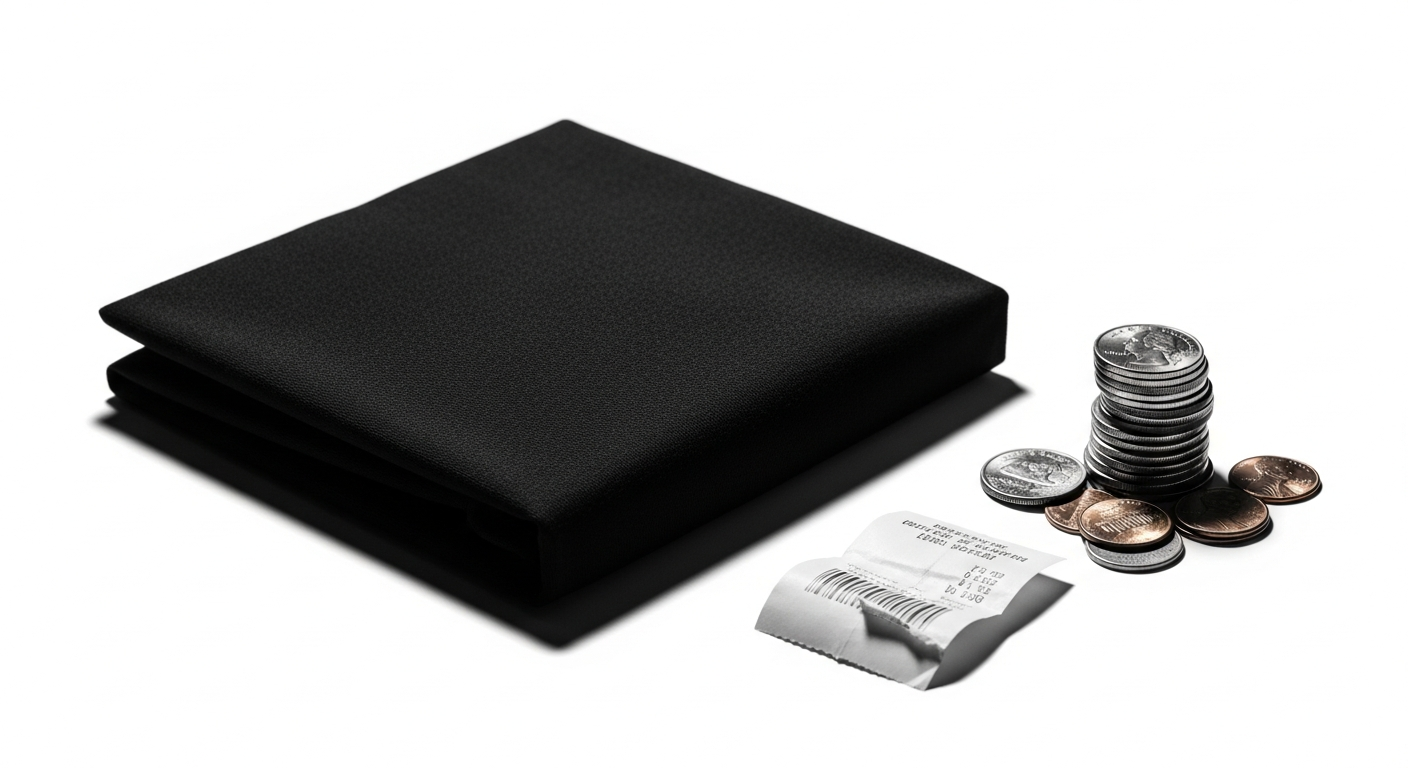
The price tag on a piece of clothing is one of the most misleading numbers in consumer purchasing.
Not because it is wrong in any factual sense — the number accurately represents what you will pay at the point of purchase. But because it is incomplete in a way that how we process prices tends to obscure: it represents the cost of the transaction without representing the cost of the decision. And for clothing, the cost of the transaction and the cost of the decision are often dramatically different numbers.
The fifteen-dollar fast fashion t-shirt costs fifteen dollars to acquire. But if it is worn eight times before it is too degraded to wear in public, and then replaced by another fifteen-dollar t-shirt that is also worn eight times before replacement, the actual cost of maintaining a wearable t-shirt in your wardrobe for one year is not fifteen dollars. It is the cost of however many fifteen-dollar purchases are required to sustain the wearing frequency you need across twelve months.
The sixty-five-dollar premium t-shirt costs sixty-five dollars to acquire. But if it is worn one hundred and thirty times before it requires replacement — a reasonable estimate for a heavyweight, well-constructed garment — the actual cost of maintaining a wearable t-shirt in your wardrobe for the period those wearings span is sixty-five dollars, once.
The premium t-shirt costs more than four times as much to buy. It costs roughly half as much per wearing. And because it lasts longer, it costs dramatically less over the period of time you need to be clothed — which is, for most people, indefinitely.
This is the core of the economic case for quality clothing, and it is the case this article is about — not as an abstract principle but as a specific, concrete, honestly calculated argument that applies to the clothing decisions most people make most regularly.
Why the Price Tag Is the Wrong Unit of Analysis
The psychological reason the price tag dominates clothing purchase decisions — even when the long-term economics favor a different choice — is well documented in behavioral economics.
Daniel Kahneman and Amos Tversky's research on what they called "anchoring" — the tendency to rely disproportionately on the first piece of numerical information encountered when making judgments — is directly relevant here. The price tag is the first number you encounter when evaluating a piece of clothing, and it anchors your sense of the clothing's cost in a way that is difficult to fully override even when you consciously know that cost-per-wearing is the more relevant metric.
The anchoring effect interacts with a second behavioral economics finding: "present bias" — the well-documented tendency to weight immediate costs more heavily than future costs, and immediate pleasures more heavily than future pleasures. The fifteen-dollar t-shirt offers an immediate pleasure — a new garment for fifteen dollars — with costs distributed across the future, where present bias makes them feel smaller. The sixty-five-dollar t-shirt requires the opposite: a larger cost paid now, in exchange for savings that are only realized over time.
The combination of anchoring and present bias produces a systematic tendency to underinvest in quality clothing relative to what the long-term economics would support — to consistently choose the low unit price over the lower long-term cost, because the unit price is immediate and the long-term cost is distributed and therefore psychologically discounted.
Understanding these biases does not automatically correct them — knowing you are subject to anchoring and present bias does not make you immune to them. But it does provide the foundation for consciously applying the more decision-relevant unit of analysis — cost-per-wearing, and cost-over-time — when making specific purchasing decisions.
The Cost-Per-Wearing Framework — How to Actually Run the Numbers
The cost-per-wearing framework is straightforward in principle and requires only two inputs: the price paid for the garment, and the number of times it is worn before it needs to be replaced. The result — price divided by wearings — gives you the actual cost of one use of the garment, which is the unit of analysis most relevant to whether the garment is worth its price.
At the fast fashion tier, the Ellen MacArthur Foundation's research on garment utilization found that the average garment in this tier is worn seven to ten times before it is discarded or repurposed. At twelve dollars per t-shirt and twelve wearings, that works out to one dollar per wearing. At fifteen dollars per t-shirt and eight wearings, it is one dollar and eighty-seven cents per wearing.
Mid-tier clothing — better constructed than fast fashion, genuinely wearable fabric but not at the heavyweight premium end — typically sustains twenty-five to fifty wearings before noticeable quality degradation. At thirty dollars per t-shirt and thirty-five wearings, that is eighty-six cents per wearing.
Premium heavyweight graphic tees — ring-spun cotton, quality screen printing, double-stitched construction — sustain seventy-five to one hundred and fifty wearings before replacement is warranted. At sixty-five dollars per t-shirt and one hundred wearings, that is sixty-five cents per wearing. At one hundred and fifty wearings, it drops to forty-three cents per wearing.
The premium t-shirt costs more than five times the fast fashion alternative per unit. It costs between thirty-five and sixty percent as much per wearing. This is not a marginal difference. It is a reversal of the cost relationship — the more expensive item is actually cheaper in the metric that matters for ongoing clothing costs.
The Replacement Cost Compounding — How Cheap Clothing Accumulates Expense
The cost-per-wearing comparison, while instructive, understates the full economic advantage of quality clothing for a specific reason: the replacement cycle of cheap clothing compounds its costs in ways the static comparison does not capture.
Each replacement purchase carries additional costs beyond the unit price of the replacement garment. There is the transaction cost — the time spent shopping for, evaluating, and acquiring the replacement. There is the cognitive cost — the decision-making effort required for each additional purchase decision. And there is the disposal cost — both the practical effort of disposing of the degraded garment and, in some cases, actual financial cost if disposal requires a paid service.
These additional costs are typically invisible in the unit price comparison — they do not appear on the price tag and are therefore not captured by the anchoring effect that makes unit price the dominant consideration. But they are real costs of the cheap clothing strategy that the quality clothing strategy avoids.
A person whose entire casual wardrobe consists of fast fashion pieces at eight-to-twelve-wear longevity is not managing one replacement cycle. They are managing the replacement cycles of every piece in the wardrobe simultaneously, each on its own degradation timeline, each requiring its own replacement decision. The cognitive load of this ongoing replacement management — the perpetual awareness that pieces are degrading and need to be replaced — is itself a cost the quality clothing alternative avoids. A wardrobe of premium pieces that will last for years simply exists and is worn, without the perpetual replacement management.
The Hidden Costs of Cheap Clothing — What the Price Tag Does Not Include
Beyond the cost-per-wearing reversal and the replacement cost compounding, there are specific hidden costs of cheap clothing that the price tag does not include.
The environmental cost is real but externalized — paid by the environment rather than the purchaser, and therefore not captured in the purchase price. It includes the water and chemical inputs of textile production, the carbon emissions of the global supply chain, and the landfill burden of the billions of garments discarded annually at the end of their short utilization cycles. For the consumer who genuinely cares about the rights of future generations — and the Unalienable Rights™ community includes a significant proportion of people who do — this is a genuine cost that does not appear in the price comparison.
Cheap clothing also tends to occupy more physical wardrobe space than premium clothing purchased with more deliberate intention, because it accumulates faster through more frequent replacement purchases. This is a minor cost for most people and a significant one for people living in constrained physical environments, but it is real, and it compounds the other economic arguments for quality clothing.
There is also the aesthetic degradation cost — the ongoing experience of wearing clothing that is visibly degrading, that is not quite as good as it used to be but has not yet crossed the replacement threshold. This cost is genuinely hard to quantify but is experienced daily by anyone whose wardrobe contains a significant proportion of clothing past its best. Quality clothing that maintains its appearance and structural integrity across many wearings avoids this cost entirely — you are always wearing the piece at or near its best.
The Psychological Economics — What Premium Clothing Does to the Relationship With Your Wardrobe
Beyond the quantifiable economic arguments, there is a category of benefit from quality clothing that operates through psychological rather than purely financial mechanisms but that has genuine economic value.
Research on "psychological ownership" — the sense of genuine ownership and attachment that produces the highest levels of product satisfaction and the lowest levels of regret — consistently finds that this sense is produced more reliably by products that are high quality, durably satisfying, and chosen deliberately than by products that are cheap, quickly degrading, and acquired with minimal deliberation.
The person who owns premium quality clothing they genuinely love and wear regularly is in a different psychological relationship with their wardrobe than the person who owns a large volume of cheap clothing constantly being assessed against replacement thresholds. The first person's relationship with their wardrobe is a source of genuine satisfaction. The second's is a source of ongoing management burden and intermittent dissatisfaction — and that dissatisfaction tends to produce more reactive purchases, made with less deliberation, that continue the cycle of cheap acquisition and rapid replacement.
The Specific Numbers — A Decade Comparison
To make the long-term economic argument concrete, it is worth running the numbers across a decade.
Assume a baseline of four graphic t-shirts in active regular rotation, each purchased from a fast fashion brand at fifteen dollars, each worn ten times before replacement, at a rate of twice per week per garment. Each garment reaches its replacement threshold in about five weeks — roughly ten replacement purchases per garment per year, or forty across four garments. At fifteen dollars each, that is six hundred dollars per year on t-shirts alone, or six thousand dollars across a decade.
Now assume the same baseline of four t-shirts, each purchased from a premium brand at sixty-five dollars, each worn one hundred and twenty times before replacement, at the same wearing rate. Each garment reaches its replacement threshold in about sixty weeks — roughly three and a half replacement purchases per garment across a decade, or fourteen total across four garments. At sixty-five dollars each, that is nine hundred and ten dollars across the decade.
The fast fashion strategy costs six thousand dollars across a decade. The premium strategy costs nine hundred and ten dollars. The premium strategy costs eighty-five percent less across the decade. For the premium strategy to cost more than the fast fashion strategy over ten years, the premium garment would need to last barely two years at the same wearing rate — a threshold any genuinely premium heavyweight construction should comfortably exceed.
The Care Dimension — How to Extend Quality Clothing's Life Further
The economic advantage of premium clothing is a function of how long it lasts, which is in turn a function of both the quality of the garment and how it is cared for.
Washing frequency is the most significant care variable. Each wash cycle subjects fabric, seams, and print to mechanical stress, chemical exposure, and thermal stress. Washing after two or three wears rather than after every single wear meaningfully extends fabric and print life. Cold water reduces thermal stress and color fading, and turning graphic tees inside out before washing reduces the friction that causes print cracking and peeling.
Tumble drying at high heat is the single most destructive regular care practice for quality clothing — heat causes cotton fibers to contract and distort, affecting fit and fabric integrity over time. Air drying eliminates this source of degradation entirely. Storing t-shirts folded rather than hung preserves collar shape, and storing with adequate ventilation, without compression, preserves fabric structure between wearings.
The additional time investment of better care — turning garments inside out, choosing cold water, air drying rather than tumble drying — is genuine but small, perhaps a few minutes per laundry cycle. Against the economic advantage of extending a premium garment's life by fifty percent or more, that small investment is straightforwardly rational.
The Complete Picture — What Quality Clothing Actually Costs
The complete economic picture of quality clothing looks like this: a lower cost-per-wearing than fast fashion alternatives, even at unit prices four to six times higher. No replacement cost compounding — the ongoing financial and cognitive expense of managing multiple concurrent replacement cycles. No hidden costs of aesthetic degradation. Dramatically lower total expenditure across a decade. And the psychological benefit of a wardrobe that is a source of genuine satisfaction rather than ongoing management burden.
For values-aligned premium clothing specifically — clothing from brands with structural charitable giving — there is also the ongoing financial contribution to the causes the clothing represents, a benefit the fast fashion alternative does not provide regardless of how the cost comparison comes out.
The price tag on quality clothing is not cheap. The cost of quality clothing, honestly and completely calculated, is.
Unalienable Rights™ produces premium heavyweight rights-themed streetwear that costs more to buy and dramatically less to own — built from materials that last, with the quality the cost-per-wearing math requires. 10% of every purchase goes to the organizations protecting the rights each piece represents. Shop the Current Drop, read Our Mission, or explore more from the Journal.